One important document can help you understand your policy’s future costs, avoid unnecessary delays, and prepare for a competitive life settlement evaluation.
If you’re considering selling your life insurance policy, there is an important document worth requesting before you begin: a current in-force illustration.
Most policyholders know their death benefit and how much they currently pay in premiums. What they may not know is how much it could cost to maintain their policy over the coming years.
That information matters when selling a life insurance policy because prospective buyers must evaluate not only the death benefit they may eventually receive, but also the future premiums required to maintain the coverage.
A current in-force illustration helps provide that information.
What Is an In-Force Life Insurance Illustration?
An in-force illustration is an updated financial projection of an existing life insurance policy.
Unlike the illustration provided when the policy was originally purchased, an in-force illustration reflects the policy’s current status and projects its future performance using specified assumptions.
Depending on the policy, it may show future premium payments, projected cash values, death benefits, policy charges, and how long coverage is expected to remain active.
For someone considering a life settlement, this information can be particularly valuable.
A policy with a $500,000 death benefit and relatively modest future premiums may attract different buyer interest than another $500,000 policy requiring substantially higher payments to maintain coverage.
The death benefits are identical, but the future financial obligations are not. Understanding those obligations is an important part of evaluating the policy’s potential market value.
How to Request an In-Force Illustration From Your Insurance Company
Obtaining the information usually begins with a call to the insurance company that issued or currently administers your policy.
You do not need to contact the agent who originally sold you the insurance. As the policy owner, you can contact the insurance company’s customer service or policyholder services department directly.
Have your policy number available and request a current in-force illustration showing projected premiums and policy values through maturity or the applicable coverage termination date.
For permanent life insurance, such as a universal life or whole life policy, ask for the illustration to show both current and guaranteed assumptions, where available.
You should also request information about any outstanding policy loans, current cash surrender value, and applicable guarantees.
For term life insurance, the company may provide a premium schedule or policy specifications instead of a traditional in-force illustration. You should also request the policy expiration date, renewal provisions, and any available conversion options.
What to Say When You Call
You can use this request:
I own an existing life insurance policy and would like a current in-force illustration showing the future premiums required to maintain my coverage through maturity.
Please include the complete year-by-year projection, current and guaranteed assumptions where applicable, and information about any policy loans or guarantees.
If my policy is term insurance, please provide the remaining premium schedule, expiration date, and any conversion options and deadlines. If the term policy is available for conversion please provide a conversion illustration for the least expensive product to age 105 or maturity.
Ask the company to send the complete document electronically. Ask them to rush the request if possible, and expect a turn-around time of 5 to 15 business days on average.
Some insurers provide these documents through their policyholder portals. Others may require a written request or assistance from a servicing representative.
If you have any trouble with the requests, a life settlement broker such as Life Policy Solutions can help you obtain the illustration.
What Should You Look for in the Illustration?
You do not need to understand every financial calculation in the document. However, several details are especially important when considering a life settlement.
Future Premium Requirements
Your current premium payment may not represent what the policy will cost in future years.
This is especially important with universal life insurance, where policy charges, credited interest, accumulated values, and funding assumptions can affect how much must be paid to maintain coverage.
An illustration can help identify whether the current premium schedule is expected to support the policy or whether additional funding may be necessary.
Guaranteed and Non-Guaranteed Values
A guaranteed value is based on contractual provisions. A non-guaranteed projection depends on assumptions that may change.
Understanding the difference is important because a projection based on current assumptions is not a promise that future policy performance will remain unchanged.
Life Settlement Buyers must account for this uncertainty when evaluating a policy.
How Long the Coverage Will Remain Active
An illustration may reveal that a policy is projected to lapse before the insured reaches an advanced age unless premiums are increased.
For a prospective buyer, that possibility affects the future cost of maintaining the insurance. For the policyholder, it may also raise important questions about whether continuing the policy is financially practical.
Outstanding Policy Loans
Existing loans can affect a policy’s cash value, net death benefit, and future performance.
These obligations should be identified during the evaluation rather than discovered after an offer has been made.
A complete illustration, together with the current policy statement, helps establish the financial condition of the coverage being considered for sale.
Why This Information Matters When Selling Life Insurance
A life settlement buyer evaluates a policy as a financial investment.
The buyer considers the insured’s age and health, the policy’s death benefit, and the anticipated cost of maintaining the insurance.
Future premium obligations are a particularly important part of that evaluation.
A buyer acquiring a policy must generally continue paying the premiums necessary to keep the coverage active. Higher anticipated costs can reduce the amount that buyer is willing to offer.
An accurate premium projection therefore helps prospective buyers evaluate the policy using more complete information.
If a buyer requests additional premium information after reviewing the initial policy documents, the insurance company may need time to prepare it. Having the information available earlier can make the evaluation more efficient.
An in-force illustration does not tell you what your life insurance policy is worth in a life settlement.
It provides information used in determining that potential value.
The actual purchase price depends on the complete policy and medical evaluation, current buyer interest, and the offers available in the secondary market.
That is where experienced life settlement broker such as Life Policy Solutions becomes important.
Life Policy Solutions evaluates the policy information, works with institutional buyers, and negotiates competing offers on behalf of the seller.
The objective is to determine what qualified buyers are willing to pay rather than relying on a single estimate.
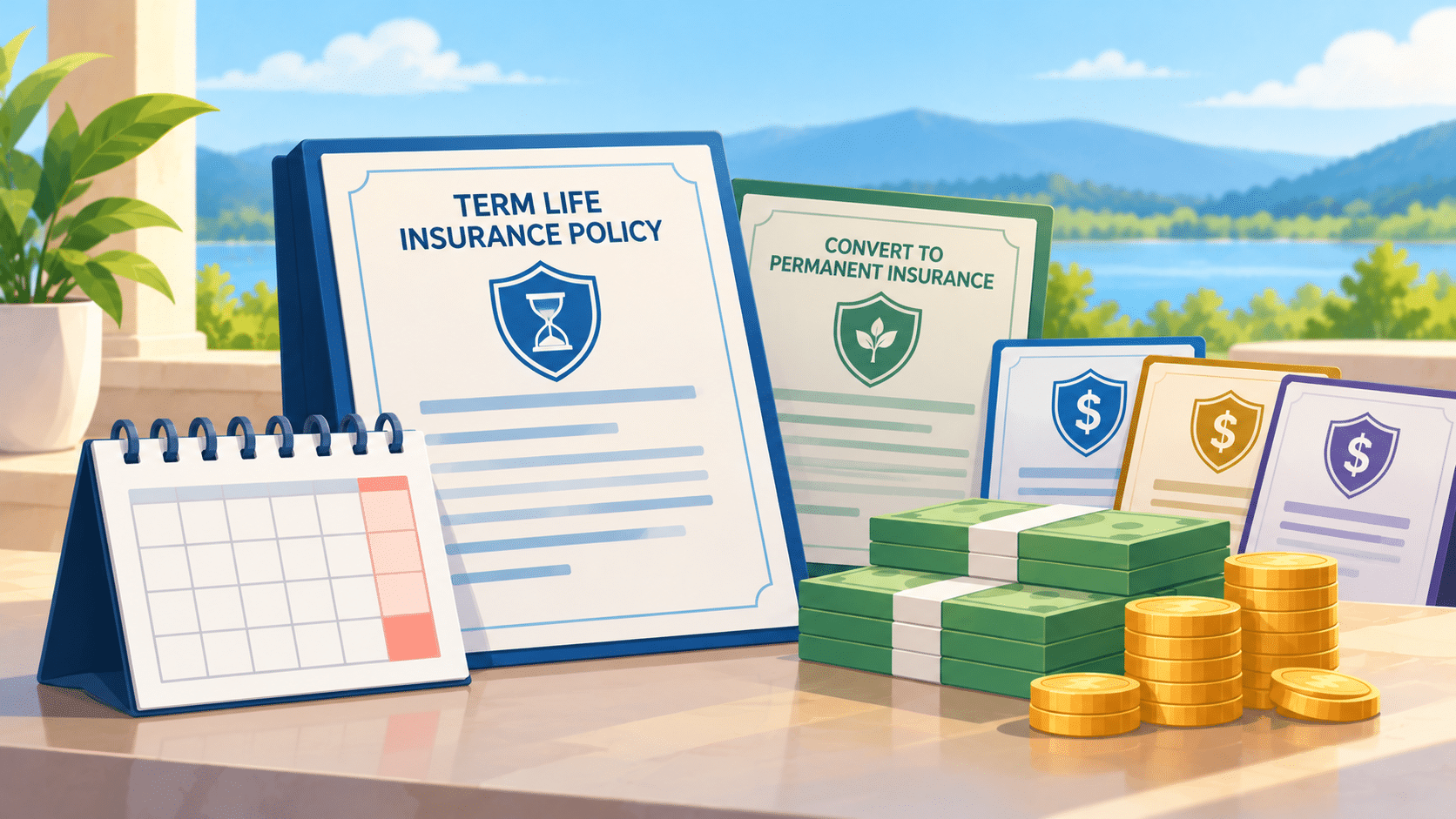
What If You Have a Term Life Insurance Policy?
Term life insurance requires special attention because the policy may have a defined expiration date.
A traditional in-force illustration may not be available or necessary for every term policy.
Instead, request the documents that establish the policy’s remaining coverage and premium obligations.
The most important information includes the current premium, future premium schedule, expiration date, renewal provisions, and any conversion rights.
A conversion option may allow an eligible term policy to be converted to permanent life insurance without new medical underwriting, subject to the policy’s conditions and deadlines.
That feature can materially affect whether a term policy is attractive to life settlement buyers.
However, a conversion option does not automatically make a policy valuable, and the absence of one does not automatically make a policy unsellable.
The insured’s age, health, remaining coverage period, premium costs, and policy size all matter.
Life Policy Solutions evaluates convertible and non-convertible term policies to determine whether a viable secondary market exists.
Do not convert a term policy solely because you are considering a life settlement. The conversion should be evaluated first, including the cost of the new coverage and its potential market value.
Should You Request an Illustration Before Contacting a Life Settlement Broker?
Ideally, yes. Having current policy information available can help accelerate the evaluation.
However, you should not delay contacting a broker if your policy is approaching expiration, a conversion deadline is near, or you are having difficulty maintaining premium payments.
An initial evaluation can begin with basic information about your age, health, death benefit, policy type, and current premiums.
Life Policy Solutions can then explain which additional documents are needed to determine whether the policy is suitable for a life settlement.
With more than 25 years of industry experience, Life Policy Solutions represents policyholders throughout the evaluation, buyer bidding, and negotiation process.
There are no upfront costs, and you are never obligated to accept an offer.
Most importantly, requesting an illustration does not commit you to selling your policy. It simply helps you understand an asset you already own.
Frequently Asked Questions
Is an in-force illustration the same as my annual policy statement?
No. An annual statement generally reports current policy information, while an in-force illustration projects future performance under specified assumptions. Both documents can be useful when evaluating a policy for a life settlement.
Can I request an in-force illustration without my insurance agent?
Yes. Policy owners can generally request policy information directly from their insurance company. The available illustration format and request procedures depend on the policy, insurer, and applicable requirements.
Does an in-force illustration show how much my life insurance policy is worth?
It may show projected cash values and surrender values, but it does not establish the price a life settlement buyer would pay. A life settlement valuation requires additional information and buyer review.
Can I sell my policy if the illustration shows increasing premiums?
Possibly. Increasing premiums affect the economics of a life settlement, but they do not automatically eliminate buyer interest. Age, health, death benefit, and other policy characteristics must also be considered.
What if my insurance company cannot provide an illustration?
Ask for the most complete available policy information, including premium schedules, coverage guarantees, loan balances, and applicable termination or conversion dates. A life settlement broker can help identify which documents are needed for the evaluation.
Make an Informed Decision Before Selling Your Policy
Understanding the future financial obligations of your life insurance policy is an important part of determining its potential market value.
A current in-force illustration can provide valuable information, but it is only one component of a complete life settlement evaluation.
Life Policy Solutions helps seniors understand their options, evaluates their policies, and represents their interests through a competitive bidding process designed to obtain the highest possible offer.
Before surrendering, canceling, or selling an existing policy, visit cashoutlifeinsurance.com or call 1-844-440-7355 for a confidential, no-obligation evaluation.